


It started when I was very young.
At Christmas reunions or whenever she meets a new friend of mine, my mum loves to tell the story of when 13-year-old Sarah desperately wanted that leather jacket she had spotted. I wrote her a letter with arguments about why I needed that jacket, pleading my case with the determination of a seasoned lawyer. Impressed by my persistence (or maybe just wanting peace and quiet), we ended up driving 2 hours to get that jacket. Not my proudest moment.
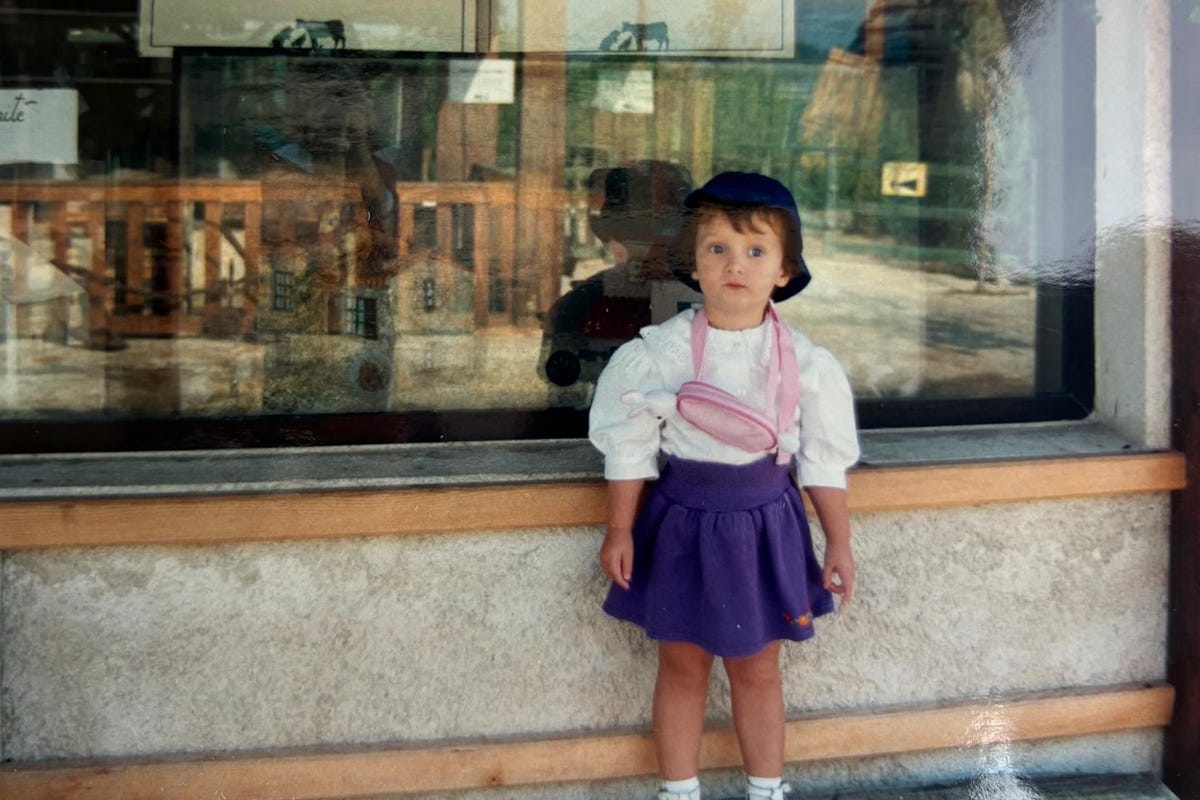
My high school years followed the same pattern. Every party became an excuse to buy a new dress. For every birthday and Christmas, I would beg my parents for clothes. Lots of them. On one wall of my bedroom, I had a big IKEA shelf filled with shoes like it was a freaking museum.
A few years later, living on my own, I transformed my bedroom into a showroom. Picture this: my bed pushed to the back of the room against one wall, and on the three other walls I had installed boutique-style clothing racks fixed to the ceiling. Underneath sat piles of clothes I barely wore. Unfortunately this was before my iCloud era and I have no photos of it, but it was pretty terrifying.
For one of my early 20s birthdays (can't remember which one specifically), I created an enormous pile of clothes that overwhelmed me. After spending the evening out with my girlfriends, I told them to choose whatever they wanted from that pile. Looking back, I think this was the first crack of awareness about how unhappy this accumulation of clothes was making me feel and how desperately I wanted others to relieve me from this burden. A burden. That's exactly how it felt. Yet I kept buying and spending every penny I owned.
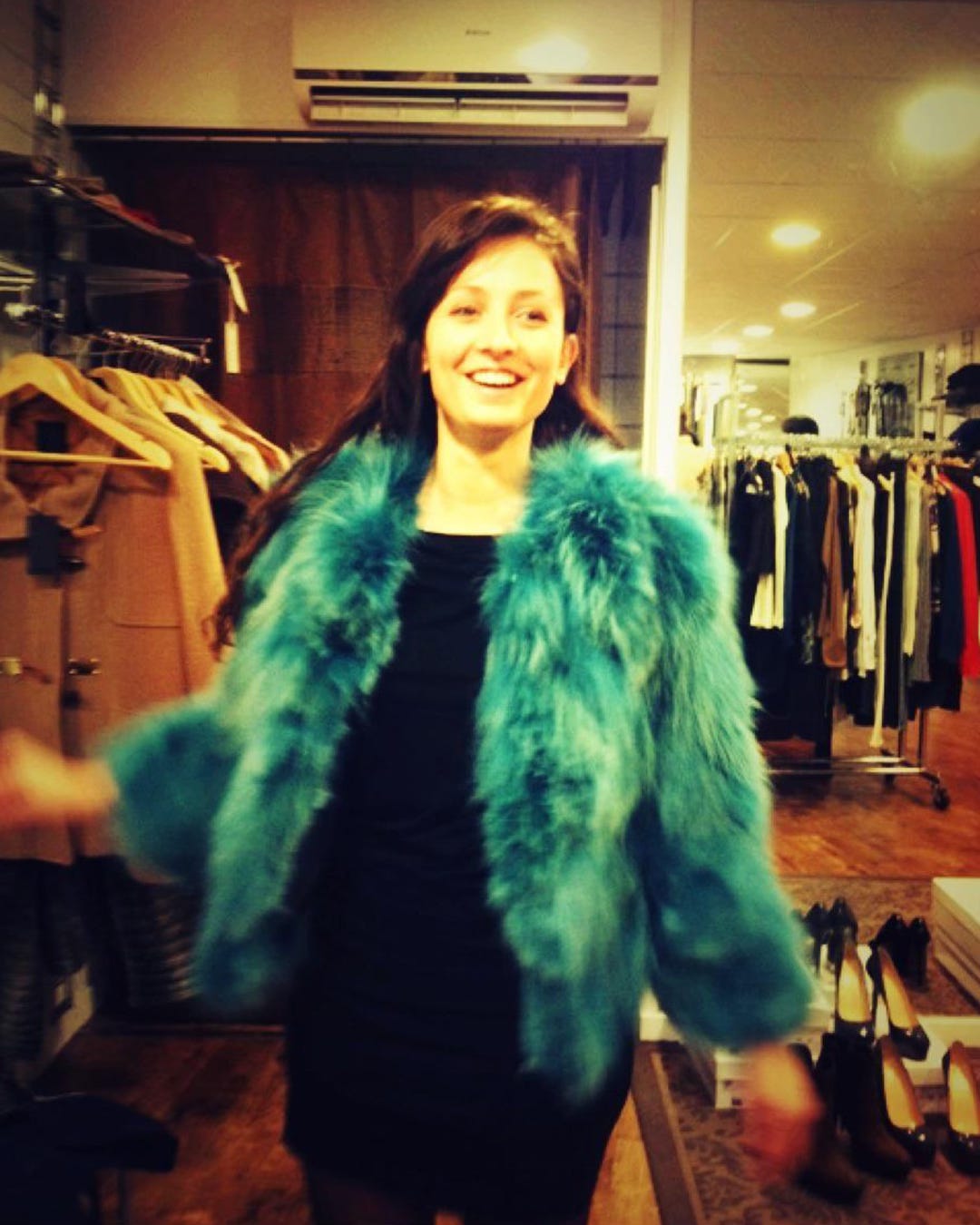
But the worst came when I started posting outfit content on social media. What they don't tell you about building a social media career in the fashion industry is that it takes years (in most cases—some people do go viral). In the beginning, you pay for all the clothes you feature, and this constant purchasing fuels your growth because people expect you to dress differently in every picture. This remains true for so many creators who work in the industry, even those who already have a following. The thing is, people want to follow creators who are doing slightly better than them. Not too much better, or else it becomes an unreachable lifestyle, but just enough that they think "oh, I could have that too." So I got into the game. While living in a grubby flat share with 8 other people, I would grab the expensive clothes I'd bought, take pictures in fancy locations, and create the illusion of a lifestyle I couldn't afford. This could (and will) be the topic of a dedicated article, so I won't go into too much detail here, but you get the idea. Now I could justify my spending: "This isn't shopping, it's investing in my brand. It's a business expense."
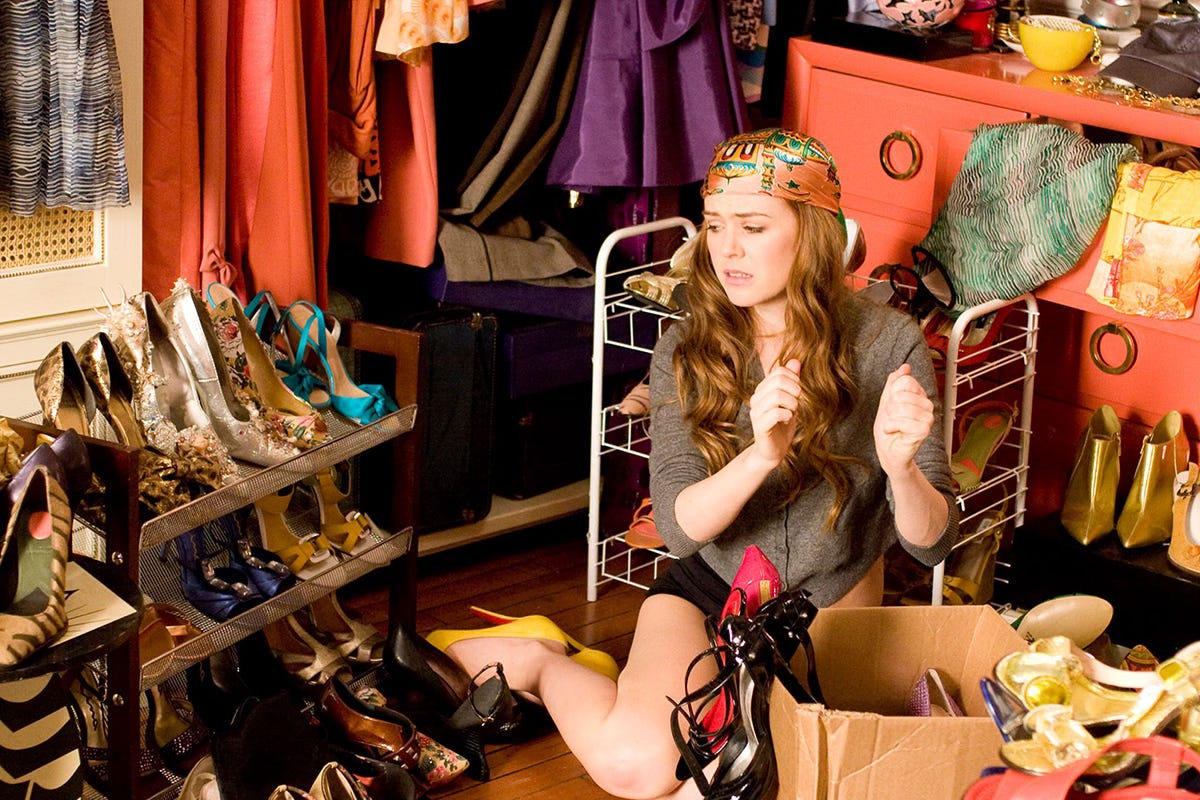
For the sake of writing this article ("research"), I rewatched Confessions of a Shopaholic. While my situation wasn't as extreme as Becky's (I never bought anything wildly expensive and never used credit), let's just say a large chunk of my pay went towards clothes. I would spend every single penny I had on them. Savings? What's that? Shopping became my way of feeling better after a bad day—that dopamine hit of walking into a shop and buying something new. If I had to skip dinner to buy that cute top, so be it. But I think what Becky and I had in common was normalising our spending and convincing ourselves that we deserved each purchase.
It was an addiction. Just like food or alcohol for some, mine was shopping. First comes the adrenaline rush when you spot a piece you love. You convince yourself that you deserve it, that it's "just £180" and you have the money anyway—you just won't buy anything else this month. Then, a few hours later, comes the crash: that sinking feeling of shame when you come down from your high, open your banking app, and see what you've actually spent.
And then, one day, something happened. My frontal lobe finally fully developed at the ripe age of 27. The transformation wasn't immediate—it unfolded gradually. Over the next few years, I slowly became someone who could admire clothes without needing to own them. Having recently hit an impressive milestone of keeping my total shopping budget below £100 per month (a genuine miracle in my case), I thought I'd share what I did to escape this shopping frenzy.
The selling addiction that replaced the buying addiction
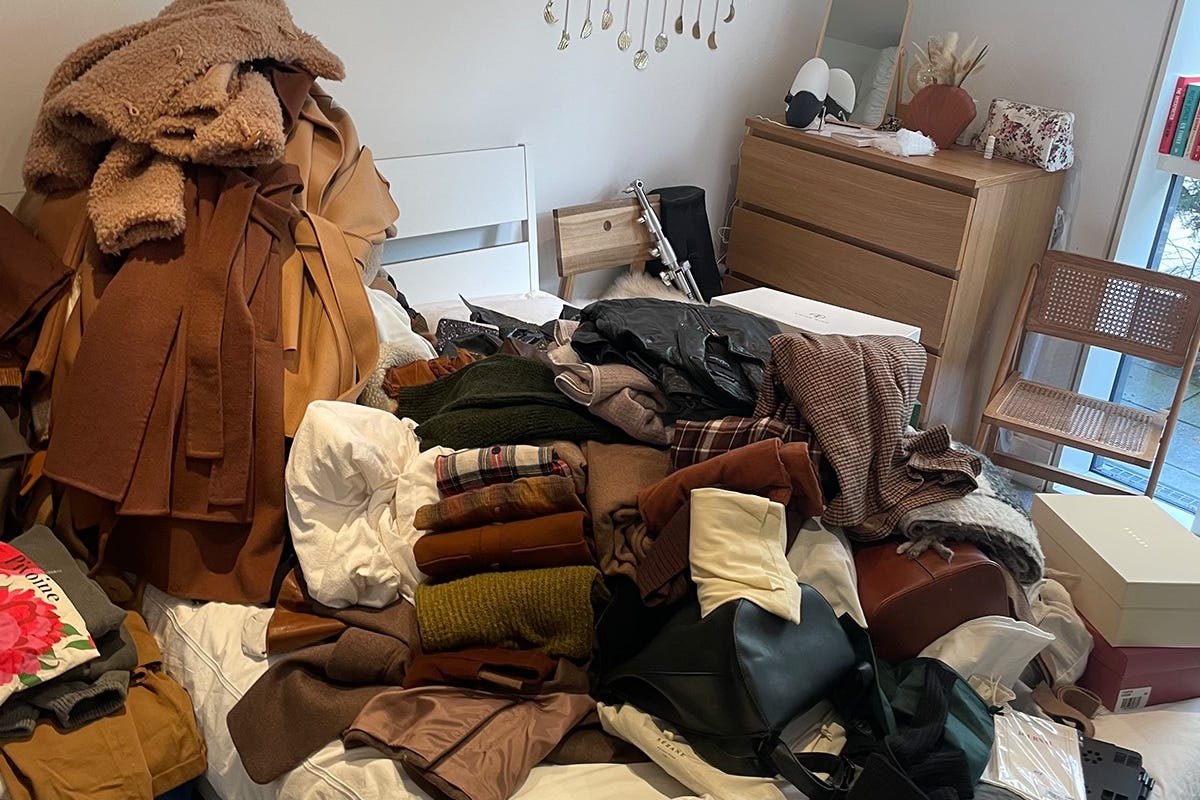
First, I discovered you could actually make money from selling your clothes. That's also how Confessions of a Shopaholic ends. I became addicted to decluttering, and still am. One random August Tuesday, I completely lost it. I began piling clothes on my bed like I was in a trance—mountains of fabric everywhere. I spent the entire day on the floor, sorting everything into piles (donate, sell, keep), then meticulously organising each pile by colour or type. These episodes happened 10-15 times over 5 years, with the pile shrinking each round. Starting at 9am on Saturday felt manageable, but when organising madness struck at 5pm on Sunday? That was a whole other story. To the great despair of my partner, who knows better than to say anything. It felt like a cleanse. It was addictive.
Listing items on Vinted became another victory. I built this little community of really cool buyers and felt genuine pride watching my clothes find new homes. See, I got sentimentally attached to clothes—not the garments themselves, but what they represented. But chatting with these amazing women on Vinted, I'd think "how cool that my jumper is going to another loving home." I also love preparing packages neatly, making sure buyers feel truly happy. Over time, I sold everything I'd accumulated over the years and funnelled the money into savings. I was finally making up for my mistakes.
Marie Kondo is my guru
During this transformation, Marie Kondo became my cult leader and guru (yes, I even considered becoming a certified Marie Kondo consultant and got serious about it). I discovered the indescribable joy of a capsule closet. Less Stuff by Lindsay Miles also helped tremendously on this journey.
Nothing beats opening your wardrobe and loving every single piece inside, knowing you actually wear them all and they fit perfectly. I now choose carefully which brands I work with in my job (you'll see me sharing lots of Sézane and Balzac because I genuinely love how they fit and wear them constantly).
I probably have fewer clothes than any other fashion blogger, and it's because I've found a system that works perfectly for me: once a month, I do a wardrobe audit. When I get new pieces (full transparency, often from brand gifting these days) and don't have enough hangers, I know it's time to sell some on Vinted. This process taught me to be ruthless about what I truly love, refine my personal style, and detach from the emotional value I used to place on certain clothes.
From retail therapy to financial therapy
I faced the financial reality of my shopping habit and learned to budget. This was a start, but what actually cured my shopping addiction was discovering how to invest. I got interested last year, then at the beginning of 2025, I took a Female Invest bootcamp. From there, it snowballed. I'd found my new addiction: caring for and growing my money. Now I get that same rush I used to feel buying a new dress when I purchase stocks or add money to my Cash ISA. This is the first thing I do when my salary hits my account—actually, it's the first thing I do whenever any money comes in.
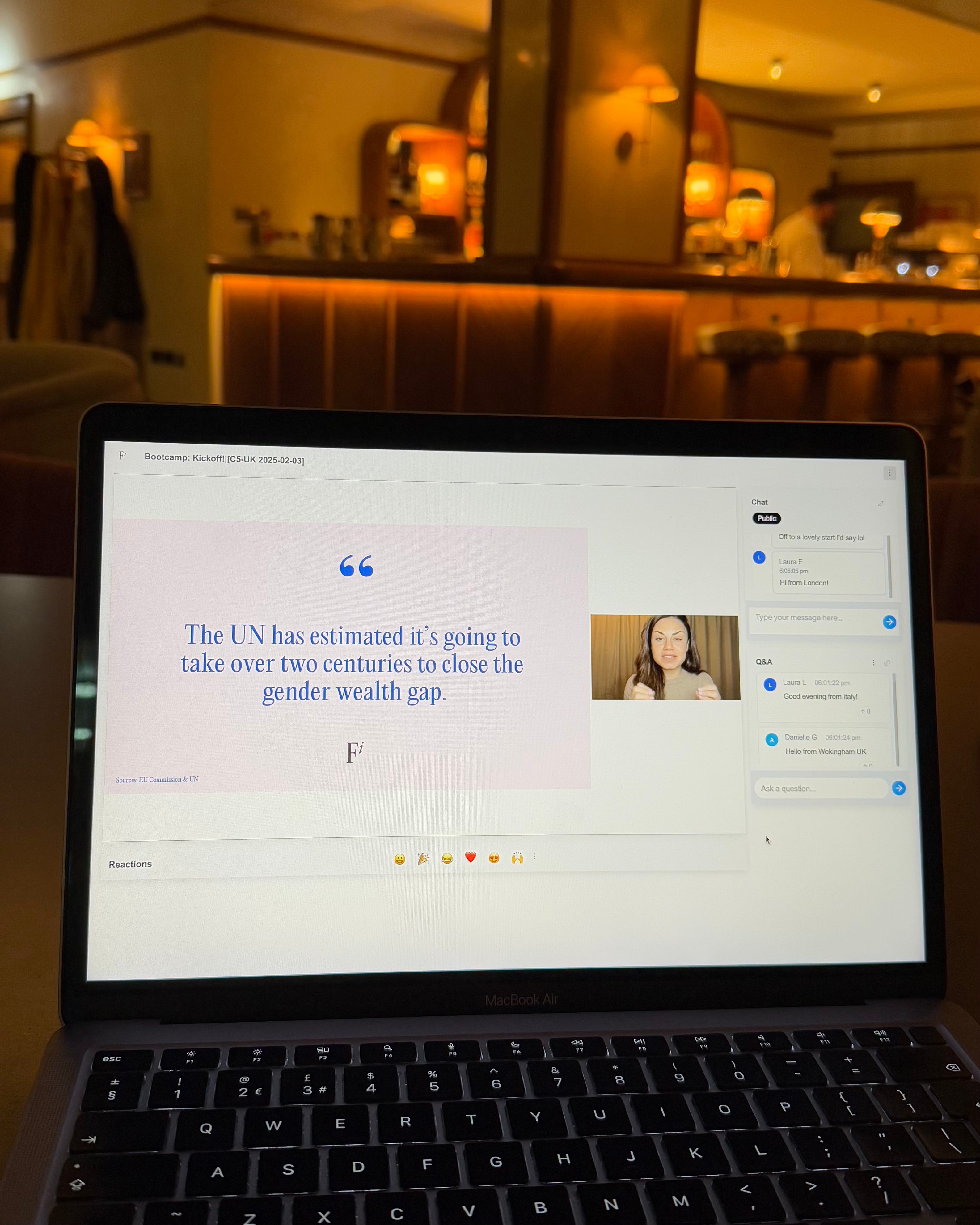
My goals have completely shifted: I want to become a homeowner (in London, no less), so I'm saving towards that dream. It makes me feel powerful and in control of my life. I was recently in a male-dominated setup discussing investments and market trends. I'm no Warren Buffett and still have loads to learn, but I actually understood what we were talking about and actively participated in the conversation. Two years ago, I would have brushed it off with "oh, I don't know anything about finance."
So yes, I completely transformed my relationship with money.
And here's another strange thing: the more I chat with my girlfriends, the more I realise most women have never learned how to invest (even the ones who are serious high earners, you'd be surprised!). They're either scared of it or convinced it's not for them. While I still love sharing my outfits and fashion on my socials and here, I now make it a priority to also share my financial journey and hopefully inspire at least one woman to take the plunge.
So maybe I really am just like Becky. Just like Becky, who turns down her dream fashion magazine role to work for her boyfriend's finance publication, giving money advice to readers who probably need it more than style tips. Like her, I've discovered that fashion and finance aren't mutually exclusive—they actually complement each other perfectly.
And honestly? Watching my savings grow, working towards my goal of homeownership, and building my investment portfolio gives me a bigger thrill than any shopping haul ever did.